“I am happiest about the fact that we were able to stop child abuse in our village.”
Sangita Shahi is a 20-year-old young woman from Shibalaya Rural Municipality in the Lotpakha village. For a long time, domestic violence was part of her everyday life. The background was her father’s daily alcohol use, which led to violence against women at home.
Things began to change when Sangita took part in SAMVAD groups supported by the Finnish Evangelical Lutheran Mission and its partner organization SAHAS Nepal. SAMVAD, which means dialogue, an approach that emphasizes the dialogue-based pedagogy. The purpose of the gatherings as a SAMVAD group is to empower girls by encouraging open discussion on issues affecting their daily lives and exploring possible solutions.
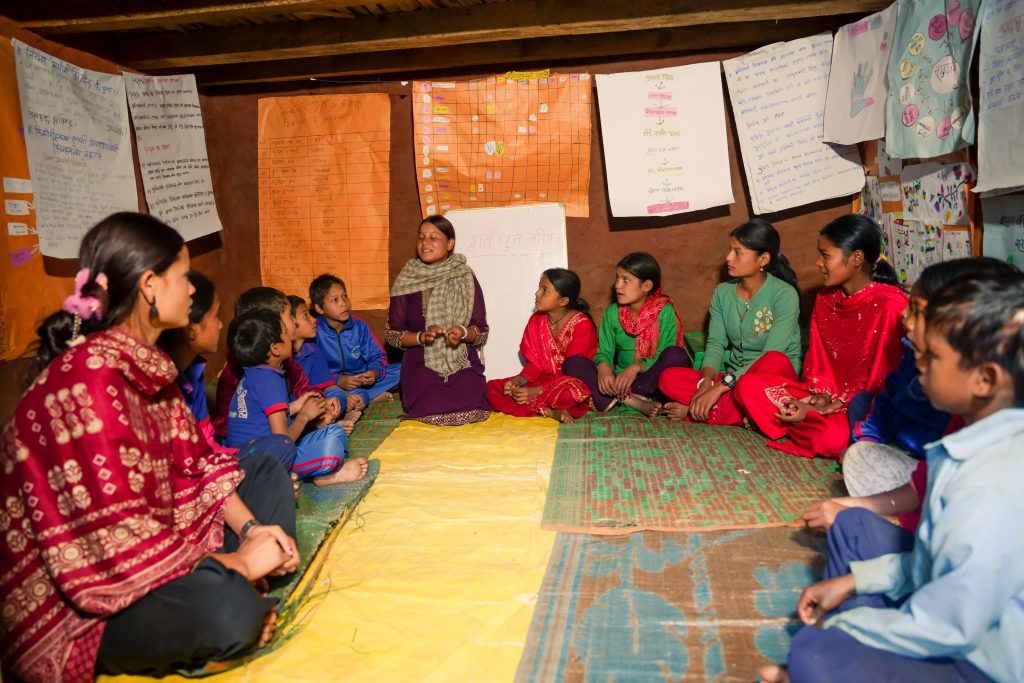
Sangita began to take what she learned in SAMVAD back home. She shared these learnings with her family and opened conversations that had not taken place before. The change was concrete and lasting.
“When I learned these things in SAMVAD, I shared them at home, and the problem has reduced a lot. Now there is no domestic violence at all in our family.”
Sangita does not see the change only in her own family. According to her, similar developments are now visible across the wider community. Domestic violence is discussed more openly, and communities are more willing to address it together.
“I really feel that we are influencing the community, and now we can see the change: domestic violence has decreased in our community.”
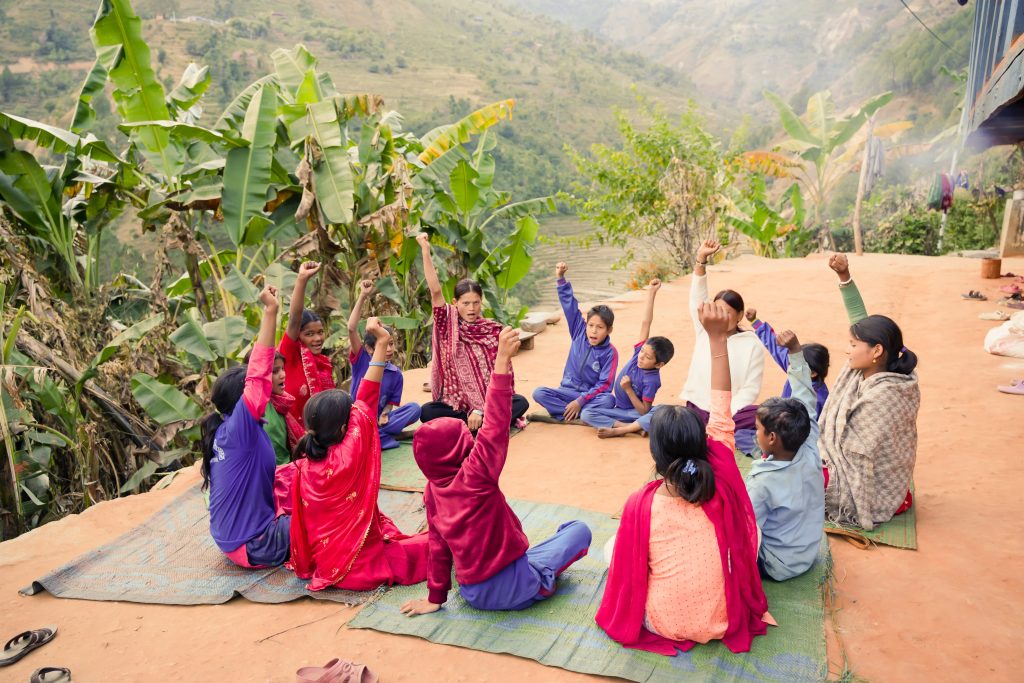
When dialogue reached the home
The Finnish Evangelical Lutheran Mission’s project in the Shibalaya area concludes at the end of 2025, and the changes are visible in everyday village life. Progress has been made especially in strengthening the position of women and girls. Livelihoods have improved, and the adoption of climate-resilient farming practices has helped increase food security.
Sangita’s village is located far from major population centres. Her days begin early in the morning with cooking, helping her siblings, and taking care of livestock. During the day she takes goats to the forest to graze, and in the evenings she helps her parents, especially with preparing dinner.
Traditional ways of life also include practices that can be harmful and exclusionary. SAMVAD activities have helped bring these issues into the open. One such practice is discrimination related to menstruation, known as chhaupadi, which has affected the lives of girls for generations.
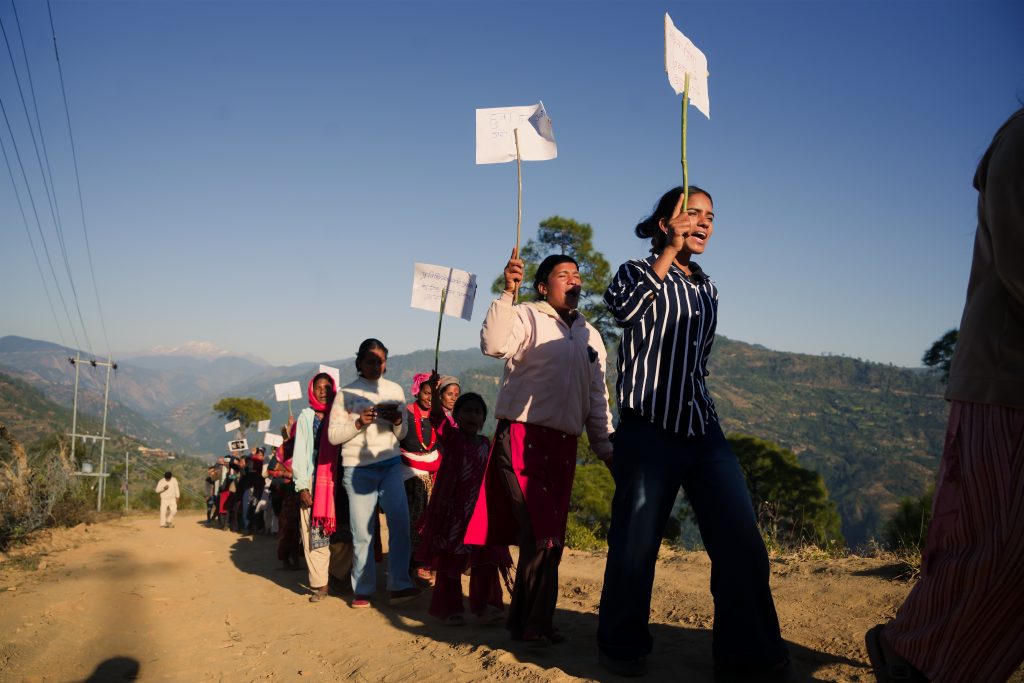
Menstrual discrimination created concrete risks and insecurity. Girls were required to stay in small separate huts away from their homes and families, where they were exposed to unhygienic conditions and dangers such as snake bites.
“During menstruation there was discrimination. We had to live far away from home and eat differently from other family members.”
In recent years, according to Sangita, this practice has changed. Girls are now able to stay at home, take care of their hygiene, and participate fully in family life even during menstruation.
“I can go to the kitchen and cook food for my whole family.”
From personal change to community impact
Alongside domestic violence and menstrual discrimination, Sangita also highlights child abuse as a serious concern. It was previously common, but through collective discussion, awareness raising, and community engagement, the situation has improved.
“Earlier there was a lot of sexual harassment, a lot of child abuse, and a lot of domestic violence, but now, by sitting together and talking about these issues, they have decreased a lot.”
SAMVAD activities have also strengthened Sangita’s confidence and motivation to continue her education. She had previously discontinued her studies after grade 10, but returned to education through the programme. Her goal is to become a teacher.
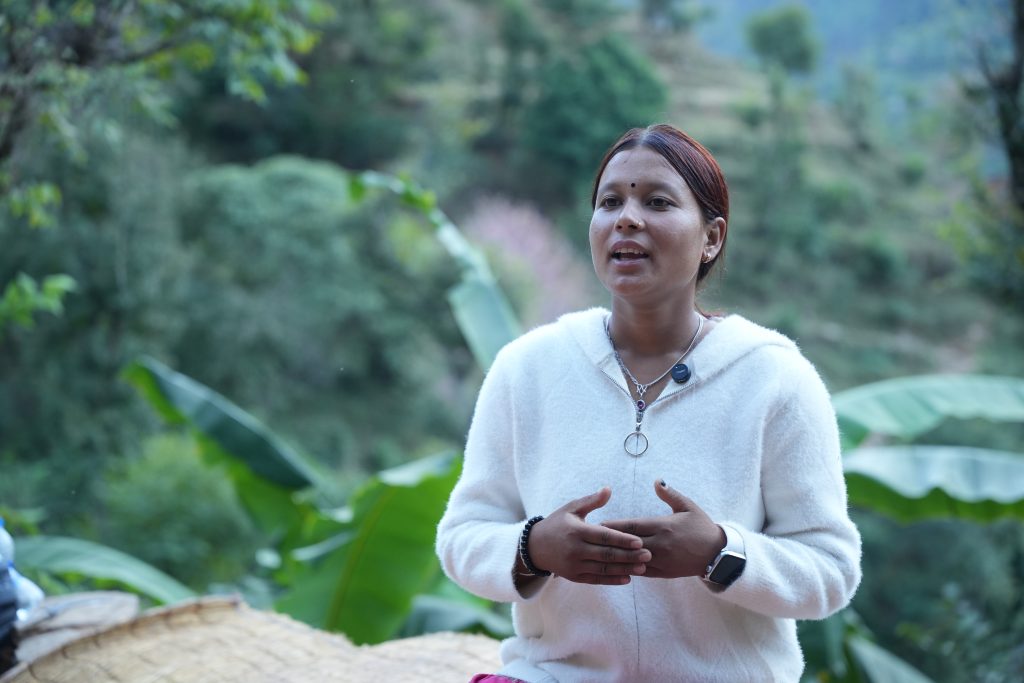
Change is also visible in the community’s economic and social structures. Women have begun earning their own income, establishing small businesses, and making independent decisions. This has contributed to more balanced power relations and reduced economic dependency.
Sangita looks to the future with confidence. She wants to continue the activities supported by SAMVAD, further develop agriculture, and strengthen livelihoods in her community.
Her message to other girls and families is grounded in experience: change begins with open dialogue, collective action, and the courage to question practices that cause harm.
Text: Taneli Heikka, Senior Communications Specialist, Felm Nepal
Funded by Finland’s development cooperation.